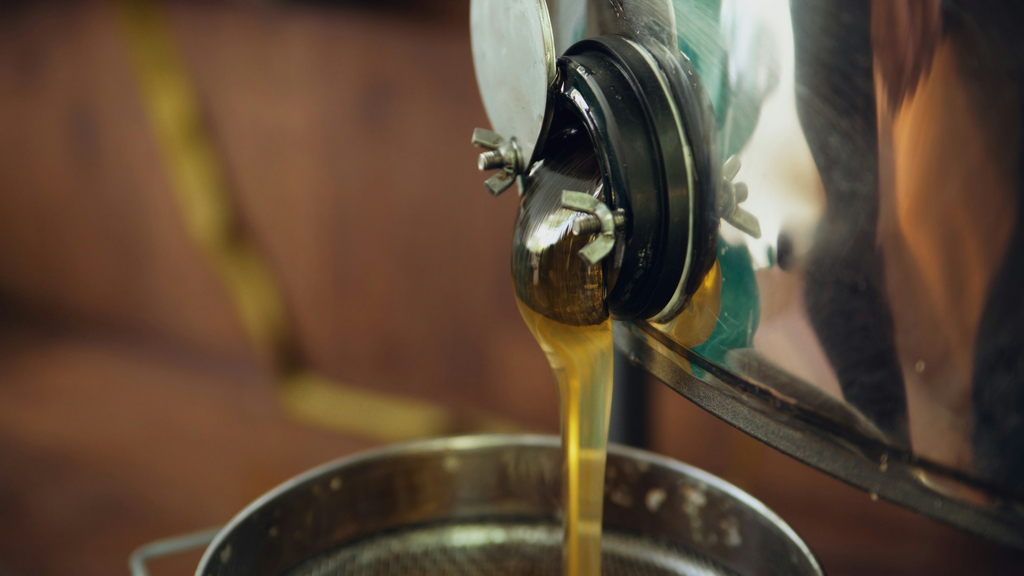


“1 How good and pleasant it is when God’s people live together in unity! 2 It is like precious oil poured on the head, running down on the beard, running down on Aaron’s beard, down on the collar of his robe. 3 It is as if the dew of Hermon were falling on Mount Zion. For there the Lord bestows his blessing, even life for evermore.” (Psalm 133)
Leviticus 8:12 refers to Moses pouring the oil of anointing on the Tabernacle and on Aaron’s head for consecration. This anointing oil was very different from other oils used for cosmetic or commonplace purposes. This was a unique, sacred oil, with a precise list of ingredients and proportions, mixed by a skilled perfumer. Exodus 30:22-25 records a specific God-given recipe consisting of: liquid Myrrh, Cinnamon, Calamus (aromatic cane), Cassia and Olive oil. It was reserved strictly and solely for holy purposes. It could not be replicated or used elsewhere or for any other purpose, on pain of excommunication (Exodus 30:32f).
This makes David’s illustration of unity in Psalm 133 even more powerful. David is comparing unity to the use of the most sacred oil in Israel, the oil that symbolised: God’s choice, God’s presence, God’s consecration and God’s blessing. The psalm suggests that unity among God’s people is something holy, precious, and divinely bestowed, not merely a pleasant human harmony. That unity sets God’s people aside into a place of abundant and rich blessing. It is not a uniformity. It is a glorious unity of those whose lives are set aside together for God’s purposes.
What a high view of unity amongst God’s people. Am I building such unity or weakening it? Is there a relationship I need to heal for blessing to come? How can I reflect Christ’s prayer that His people “may be brought to complete unity” (John 17:20-23)?